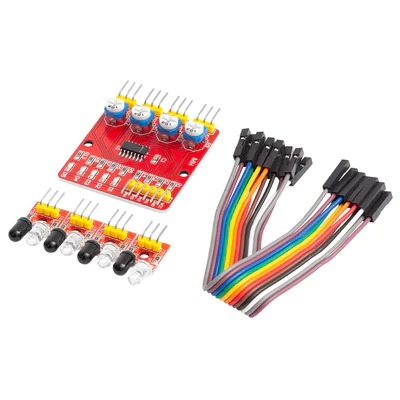
4 Channel Infrared Tracking Module

  1. Working voltage (V): 3.3 ~ 5
  2. Working current (A): Above 1A
  3. Operating Temperature (℃): -10 ~ +50
  4. Mounting hole: M3
  5. Detection range: 1mm ~ 60 cm adjustable.
SKU: EK467 Categories: , Tags: , ,

Apple Shopping Event

Hurry and get discounts on all Apple devices up to 20%

160,00 EGP

17 People watching this product now!

Payment Methods:

Description

Features:

  1. Detection range: 1mm to 60 CM adjustable, the closer the performance more stable, white reflects the farthest distance.
  2. Size: in the control panel:42 x 38 x 12mm (length x width x height).
  3. Small forward: 25 x 12 x 12mm (length x width x height).
  4. Output interface: 6 wire interface (1234 to 4 signal output ends, + positive power, – for the negative power is ground)
  5. The output signal: TTL level (can be directly connected to I/0 microcontroller, infrared light reflected back to the sensor induction, the red indicator light, output low level; no infrared light, the indicator light does not shine, the output high.)

Package Includes:

1 x Tracking Module (Hollow Board + Small Plate Forward).

12 X Male to Male Dupont Lines (20 cm long).

🔌
Pin Connections
1 Table
Pin Connections Table 1
BoardSensor PinConnection
Line ArrayVCC/GND/OUT1-43.3-5V / GND / 4 board digital pins
📟
4 Channel Infrared Tracking Module
7 Examples • C/C++ | Boards: Arduino Uno, Arduino Nano, Arduino Mega, ESP32, ESP8266, STM32, Raspberry Pi Pico
4 Channel Infrared Tracking Module - Arduino Uno
4 Channel Infrared Tracking Module - Arduino Nano
4 Channel Infrared Tracking Module - Arduino Mega
4 Channel Infrared Tracking Module - ESP32
4 Channel Infrared Tracking Module - ESP8266
4 Channel Infrared Tracking Module - STM32
4 Channel Infrared Tracking Module - Raspberry Pi Pico
📄 File: 4_channel_infrared_tracking_module_-_arduino_uno.inoArduino Uno
517 characters
1//ekostra.com
2//electronics store in egypt
3//+201008896258
4
5// 4 digital channel pins on Arduino Uno: 2, 3, 4, 5
6const int NUM_CHANNELS = 4;
7int sensorPins[NUM_CHANNELS] = {2, 3, 4, 5};
8
9void setup() {
10 Serial.begin(115200);
11 for (int i = 0; i < NUM_CHANNELS; i++) pinMode(sensorPins[i], INPUT);
12}
13
14void loop() {
15 for (int i = 0; i < NUM_CHANNELS; i++) {
16 Serial.print(digitalRead(sensorPins[i])); // typically LOW = line detected (black surface)
17 Serial.print(" ");
18 }
19 Serial.println();
20 delay(100);
21}
📄 File: 4_channel_infrared_tracking_module_-_arduino_nano.inoArduino Nano
518 characters
1//ekostra.com
2//electronics store in egypt
3//+201008896258
4
5// 4 digital channel pins on Arduino Nano: 2, 3, 4, 5
6const int NUM_CHANNELS = 4;
7int sensorPins[NUM_CHANNELS] = {2, 3, 4, 5};
8
9void setup() {
10 Serial.begin(115200);
11 for (int i = 0; i < NUM_CHANNELS; i++) pinMode(sensorPins[i], INPUT);
12}
13
14void loop() {
15 for (int i = 0; i < NUM_CHANNELS; i++) {
16 Serial.print(digitalRead(sensorPins[i])); // typically LOW = line detected (black surface)
17 Serial.print(" ");
18 }
19 Serial.println();
20 delay(100);
21}
📄 File: 4_channel_infrared_tracking_module_-_arduino_mega.inoArduino Mega
518 characters
1//ekostra.com
2//electronics store in egypt
3//+201008896258
4
5// 4 digital channel pins on Arduino Mega: 2, 3, 4, 5
6const int NUM_CHANNELS = 4;
7int sensorPins[NUM_CHANNELS] = {2, 3, 4, 5};
8
9void setup() {
10 Serial.begin(115200);
11 for (int i = 0; i < NUM_CHANNELS; i++) pinMode(sensorPins[i], INPUT);
12}
13
14void loop() {
15 for (int i = 0; i < NUM_CHANNELS; i++) {
16 Serial.print(digitalRead(sensorPins[i])); // typically LOW = line detected (black surface)
17 Serial.print(" ");
18 }
19 Serial.println();
20 delay(100);
21}
📄 File: 4_channel_infrared_tracking_module_-_esp32.inoESP32
519 characters
1//ekostra.com
2//electronics store in egypt
3//+201008896258
4
5// 4 digital channel pins on ESP32: 13, 14, 27, 26
6const int NUM_CHANNELS = 4;
7int sensorPins[NUM_CHANNELS] = {13, 14, 27, 26};
8
9void setup() {
10 Serial.begin(115200);
11 for (int i = 0; i < NUM_CHANNELS; i++) pinMode(sensorPins[i], INPUT);
12}
13
14void loop() {
15 for (int i = 0; i < NUM_CHANNELS; i++) {
16 Serial.print(digitalRead(sensorPins[i])); // typically LOW = line detected (black surface)
17 Serial.print(" ");
18 }
19 Serial.println();
20 delay(100);
21}
📄 File: 4_channel_infrared_tracking_module_-_esp8266.inoESP8266
521 characters
1//ekostra.com
2//electronics store in egypt
3//+201008896258
4
5// 4 digital channel pins on ESP8266: D0, D3, D4, D5
6const int NUM_CHANNELS = 4;
7int sensorPins[NUM_CHANNELS] = {D0, D3, D4, D5};
8
9void setup() {
10 Serial.begin(115200);
11 for (int i = 0; i < NUM_CHANNELS; i++) pinMode(sensorPins[i], INPUT);
12}
13
14void loop() {
15 for (int i = 0; i < NUM_CHANNELS; i++) {
16 Serial.print(digitalRead(sensorPins[i])); // typically LOW = line detected (black surface)
17 Serial.print(" ");
18 }
19 Serial.println();
20 delay(100);
21}
📄 File: 4_channel_infrared_tracking_module_-_stm32.inoSTM32
527 characters
1//ekostra.com
2//electronics store in egypt
3//+201008896258
4
5// 4 digital channel pins on STM32: PA0, PA1, PA2, PA3
6const int NUM_CHANNELS = 4;
7int sensorPins[NUM_CHANNELS] = {PA0, PA1, PA2, PA3};
8
9void setup() {
10 Serial.begin(115200);
11 for (int i = 0; i < NUM_CHANNELS; i++) pinMode(sensorPins[i], INPUT);
12}
13
14void loop() {
15 for (int i = 0; i < NUM_CHANNELS; i++) {
16 Serial.print(digitalRead(sensorPins[i])); // typically LOW = line detected (black surface)
17 Serial.print(" ");
18 }
19 Serial.println();
20 delay(100);
21}
📄 File: 4_channel_infrared_tracking_module_-_raspberry_pi_pico.inoRaspberry Pi Pico
531 characters
1//ekostra.com
2//electronics store in egypt
3//+201008896258
4
5// 4 digital channel pins on Raspberry Pi Pico: 10, 11, 12, 13
6const int NUM_CHANNELS = 4;
7int sensorPins[NUM_CHANNELS] = {10, 11, 12, 13};
8
9void setup() {
10 Serial.begin(115200);
11 for (int i = 0; i < NUM_CHANNELS; i++) pinMode(sensorPins[i], INPUT);
12}
13
14void loop() {
15 for (int i = 0; i < NUM_CHANNELS; i++) {
16 Serial.print(digitalRead(sensorPins[i])); // typically LOW = line detected (black surface)
17 Serial.print(" ");
18 }
19 Serial.println();
20 delay(100);
21}
4-channel IR reflective line-tracking array.

نظرة عامة ومواصفات المنتج — بالعربية

4 Channel Infrared Tracking Module متوفر الآن في متجر إكوسترا للإلكترونيات، ضمن قسم Line Sensor وSensors، بسعر 160,00 EGP. كود المنتج لدينا: EK467. المنتج متوفر في المخزون وجاهز للشحن الفوري لكل محافظات مصر مع إمكانية الدفع عند الاستلام.

أهم المواصفات الفنية:

  • Working Voltage V: 3.3 ~ 5
  • Working Current A: Above 1A
  • Operating Temperature %E2%84%83: -10 ~ +50
  • Mounting Hole: M3
  • Detection Range: 1mm ~ 60 cm adjustable.
  • الوزن: 25 g

هذا المنتج مناسب لمشاريع الأردوينو (Arduino) و ESP32 و Raspberry Pi، ومشاريع الروبوتات وإنترنت الأشياء والتعليم الهندسي. جميع القطع مفحوصة قبل الشحن.

تصفّح المزيد من Line Sensor في إكوسترا.

Specification

Specification

WeightWeight25,0000 g
Dimensions3 × 2 × 1 cm
working-voltage-v3.3 ~ 5
working-current-aAbove 1A
operating-temperature-%e2%84%83-10 ~ +50
mounting-holeM3
detection-range1mm ~ 60 cm adjustable.

Customer Reviews